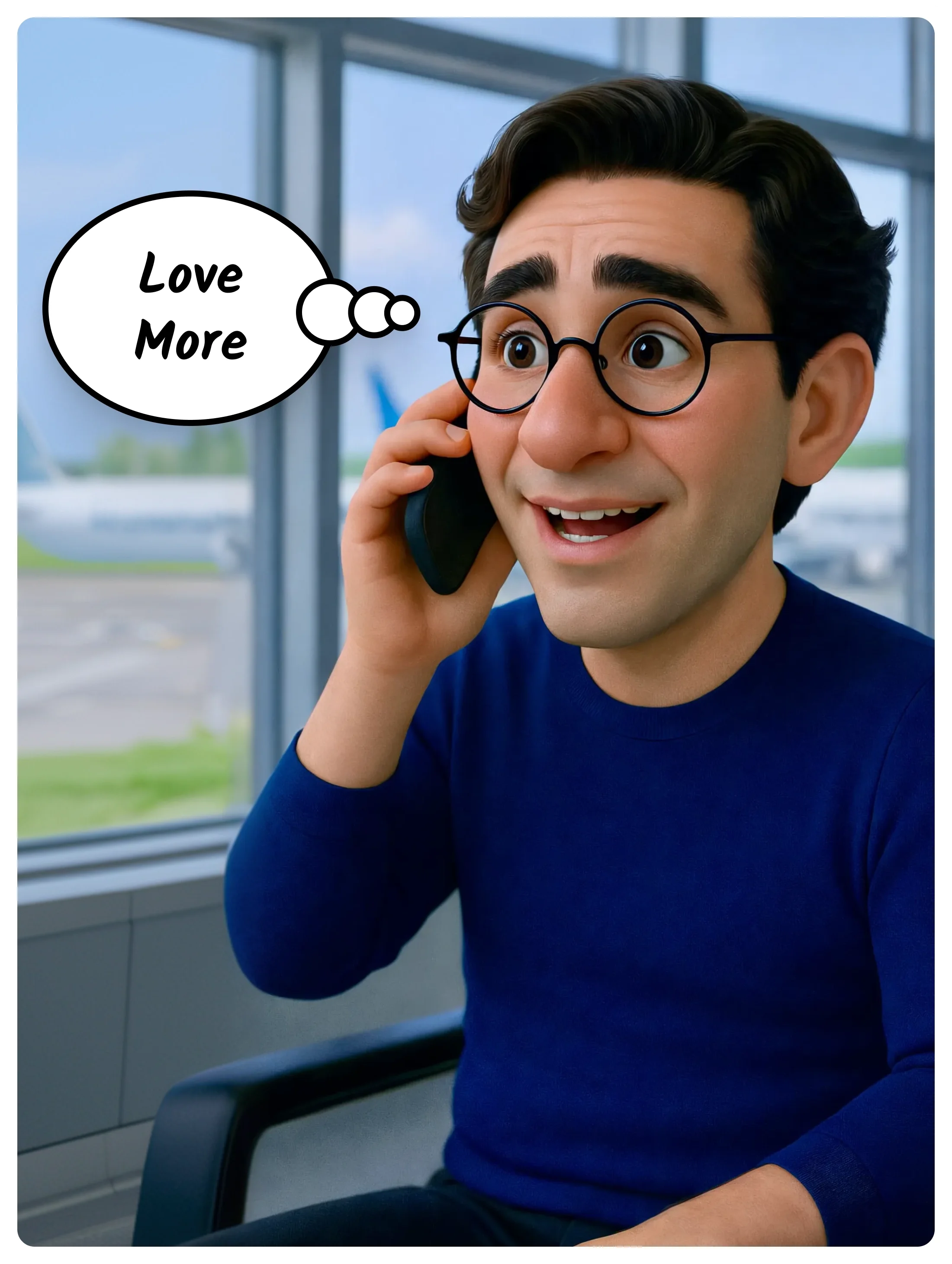
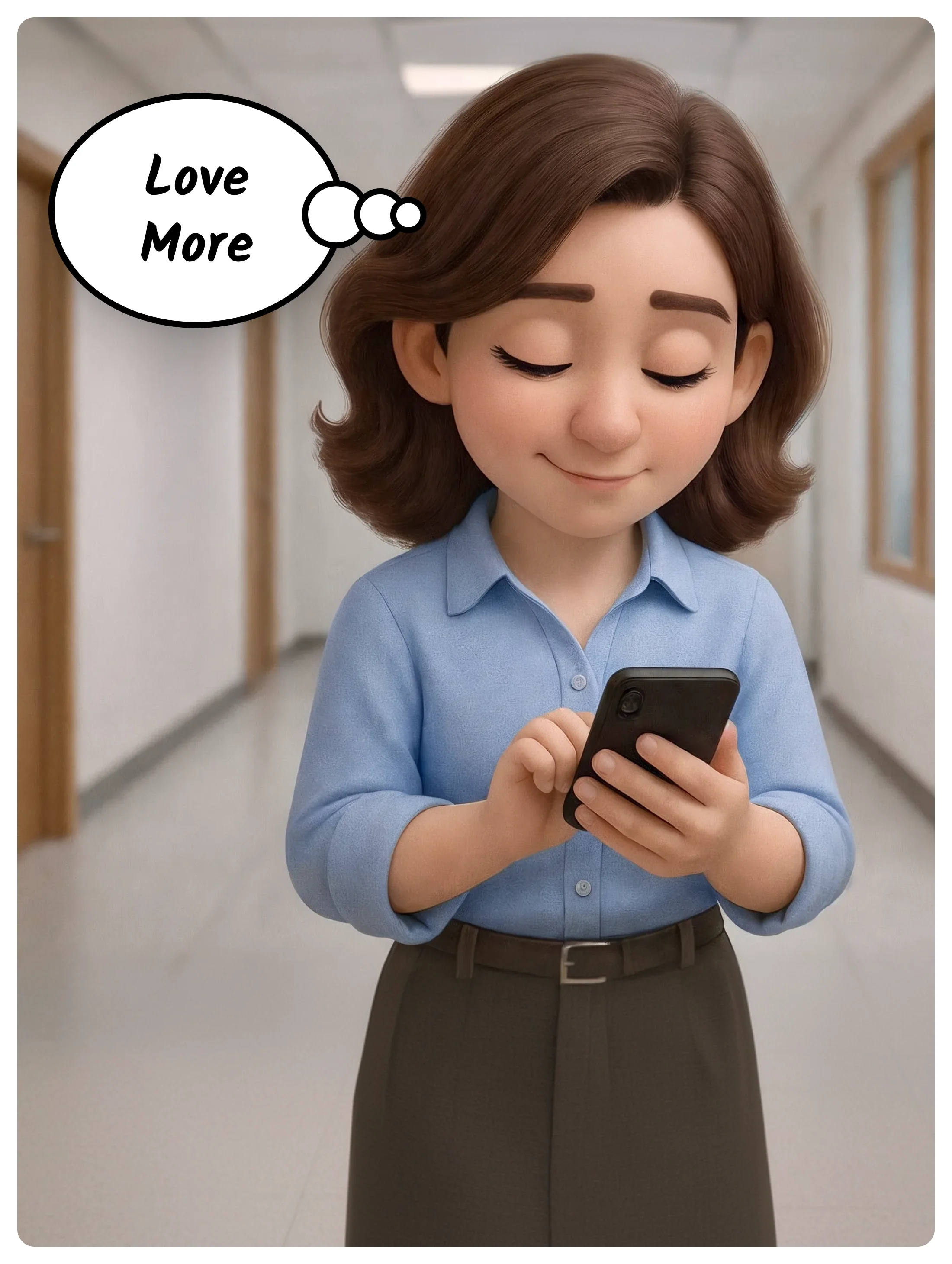
F like funny… G like geek
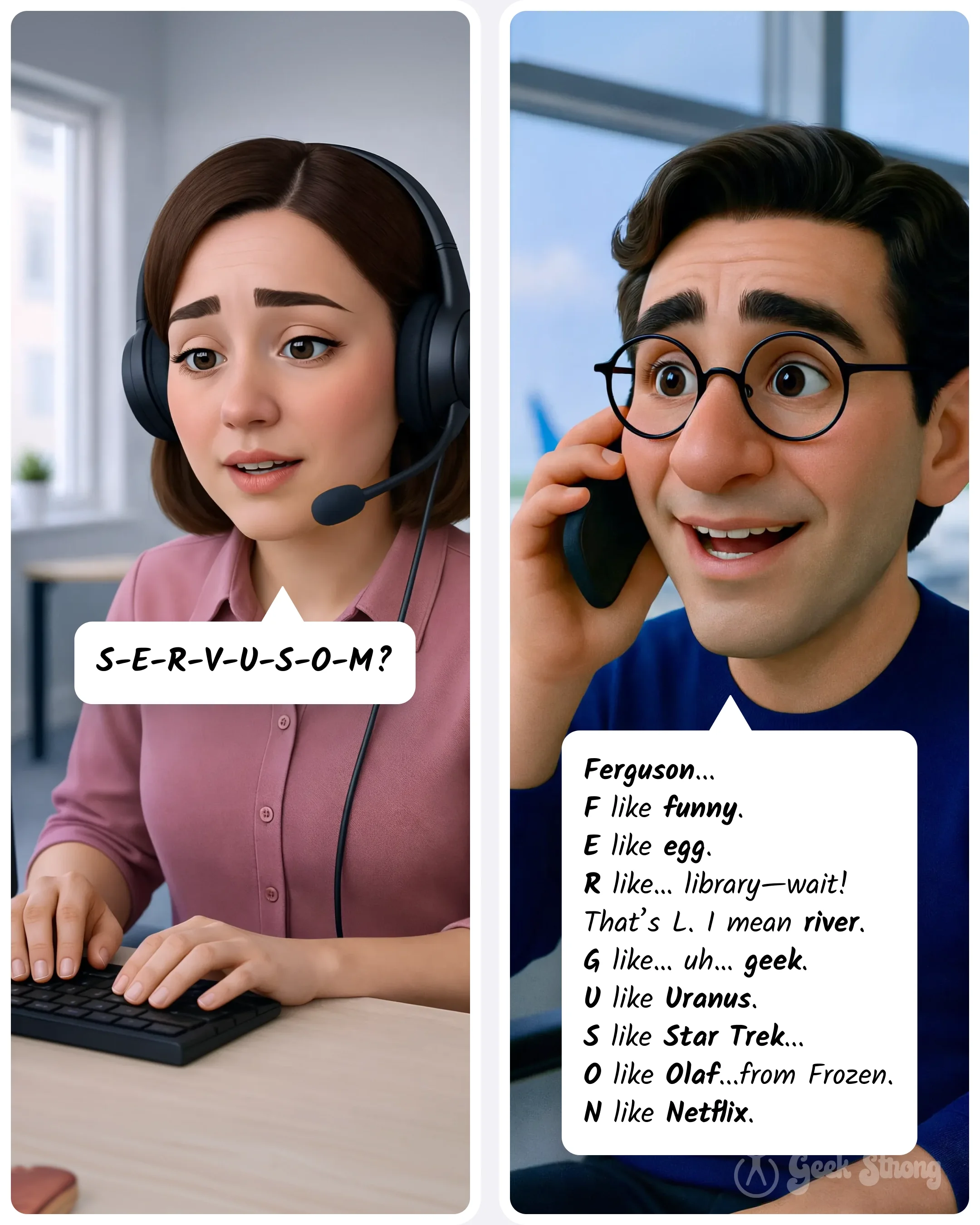
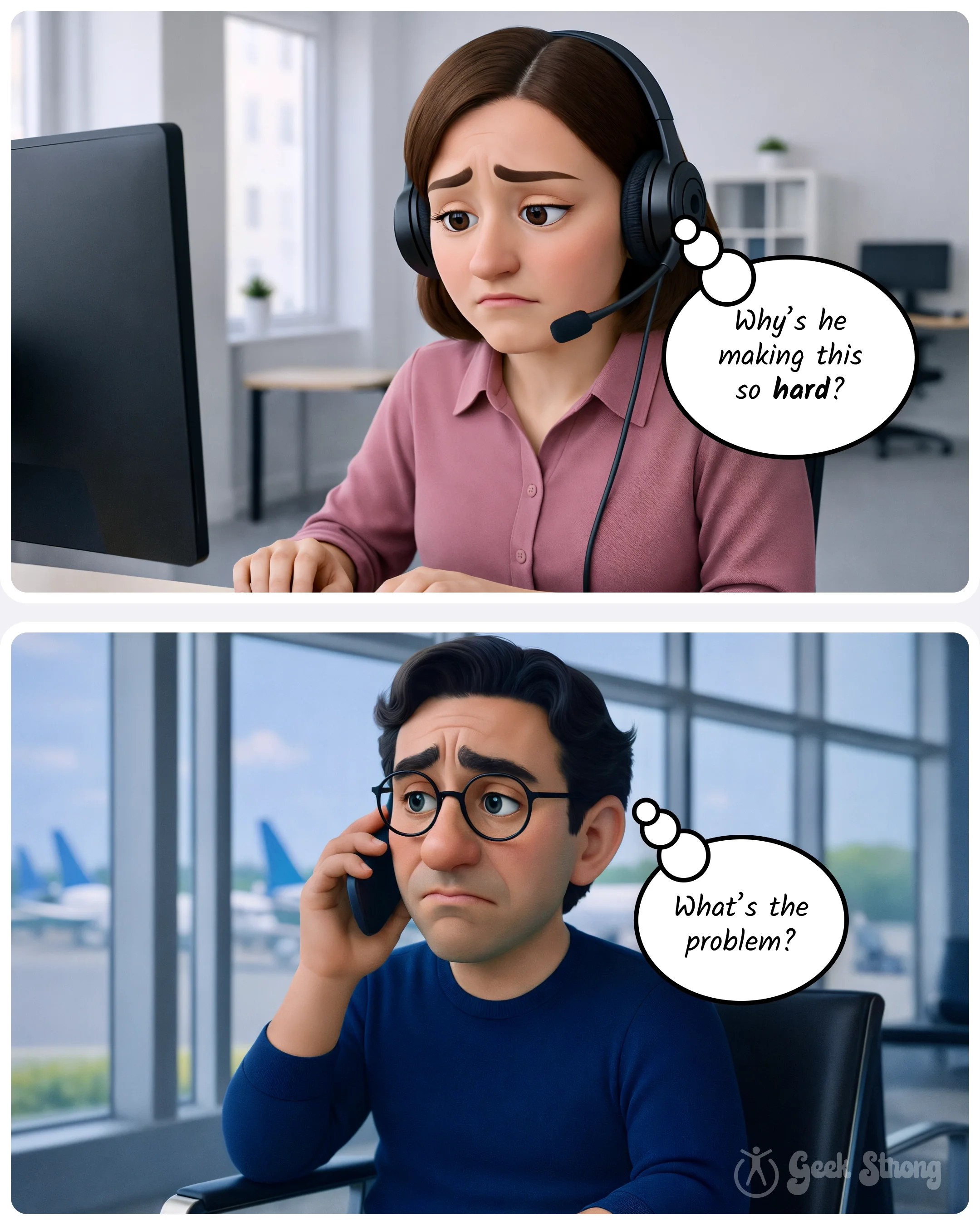
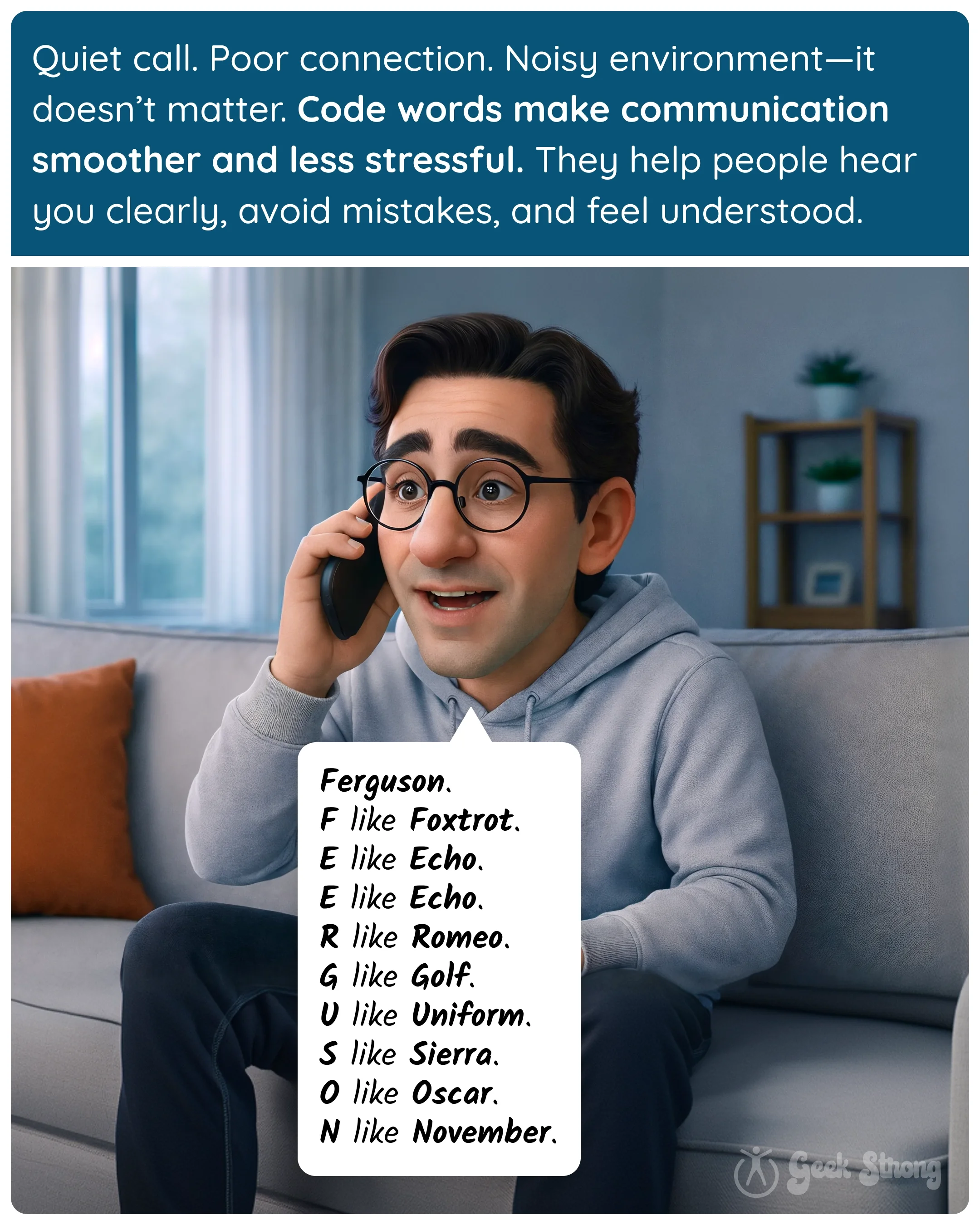
Mr. Ferguson's last name should have been simple to spell. It was not. There's a better system for that.

-
Trying to spell something over the phone shouldn't feel like defusing a bomb, but somehow it always does.
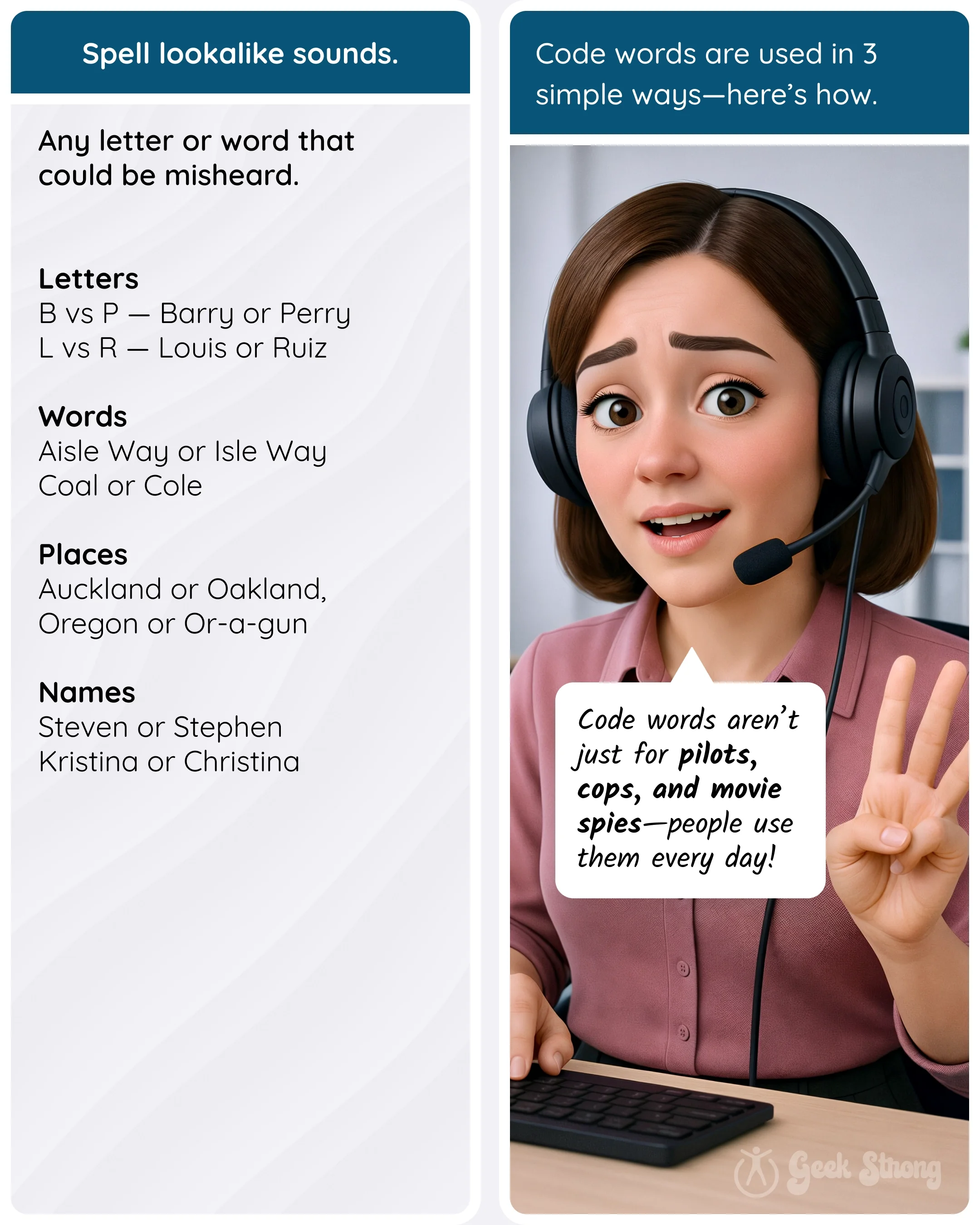
One second, you confidently say: "F like funny…" The next: "R like… library — wait, no, that's L. I mean river."
System crash.
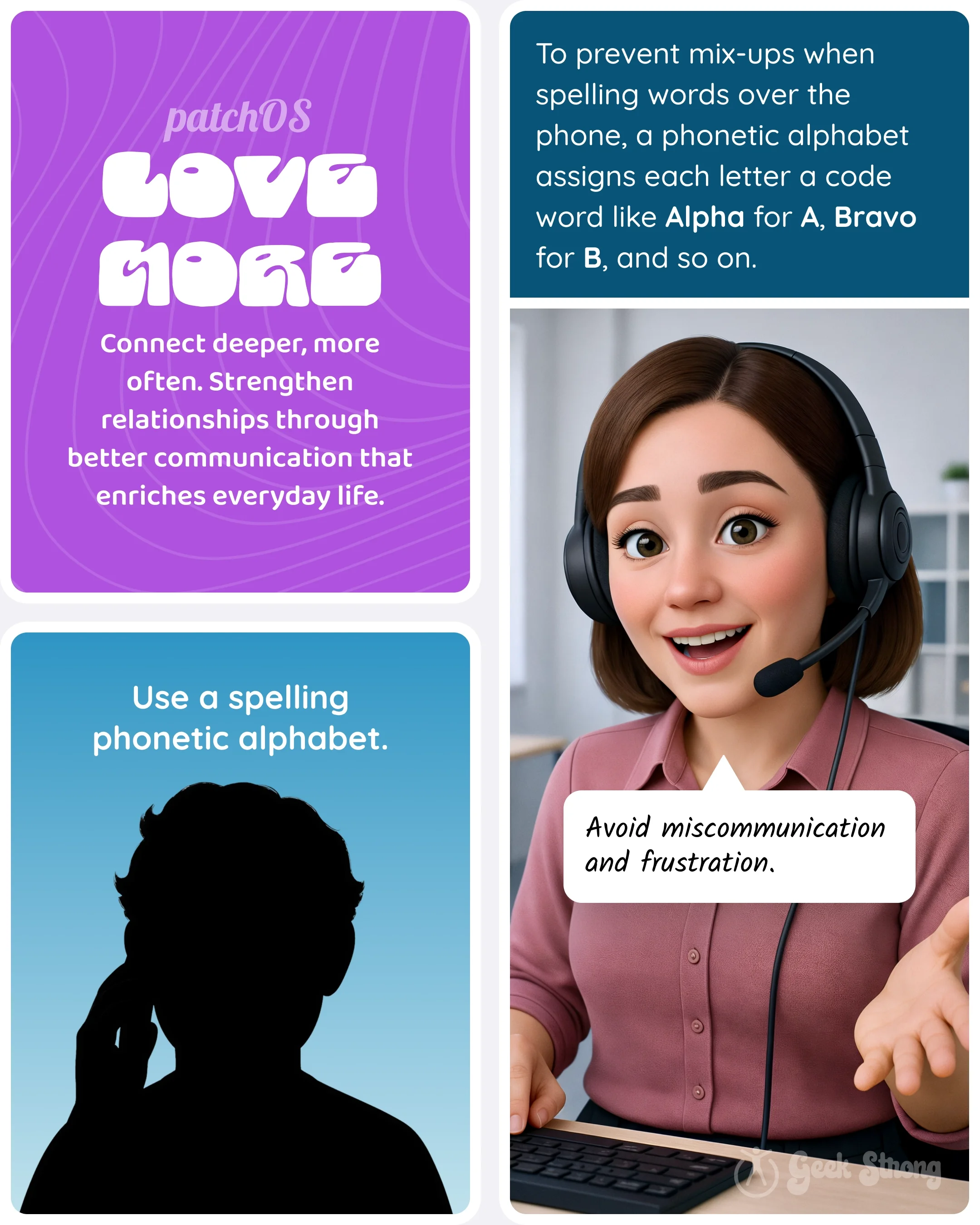
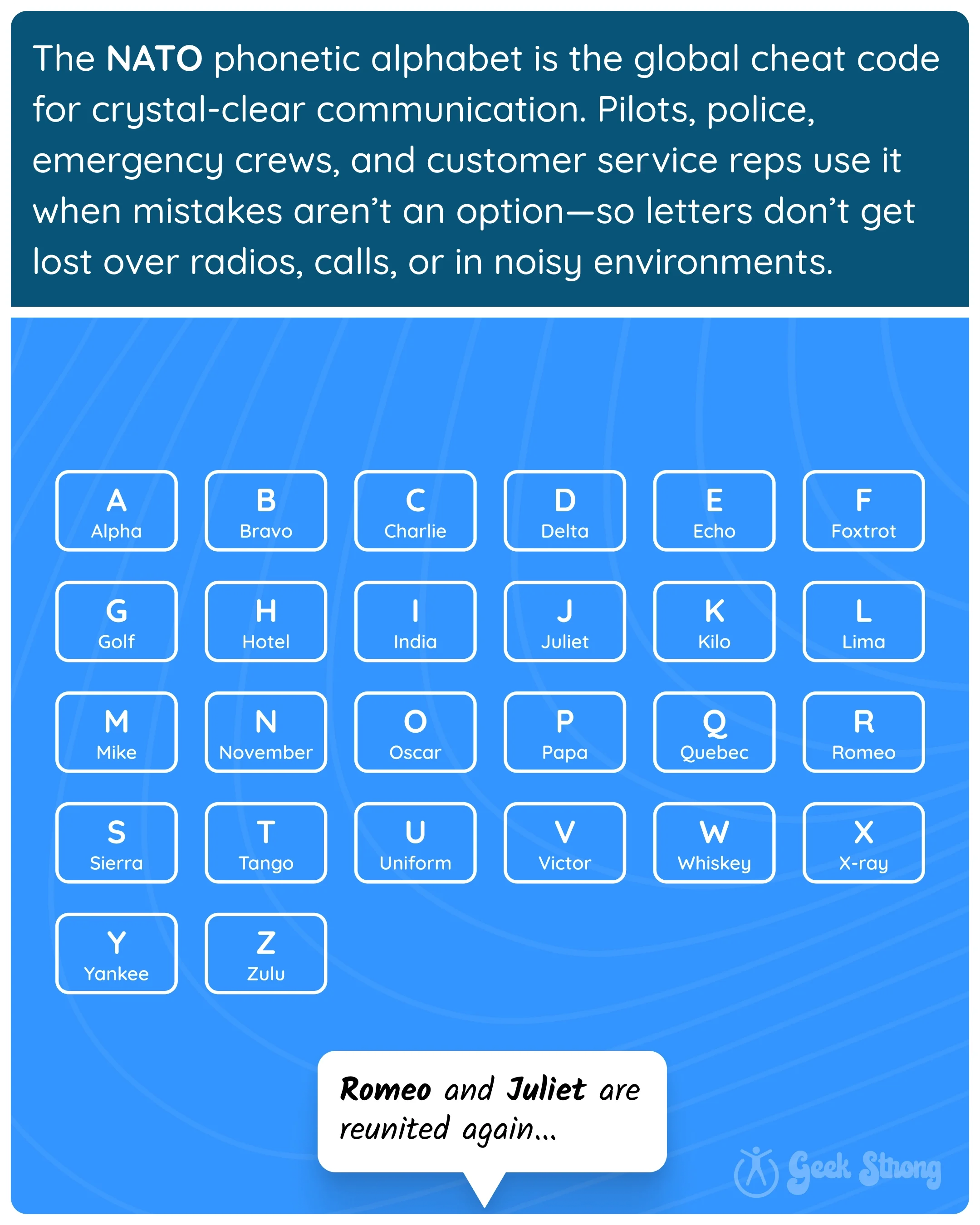
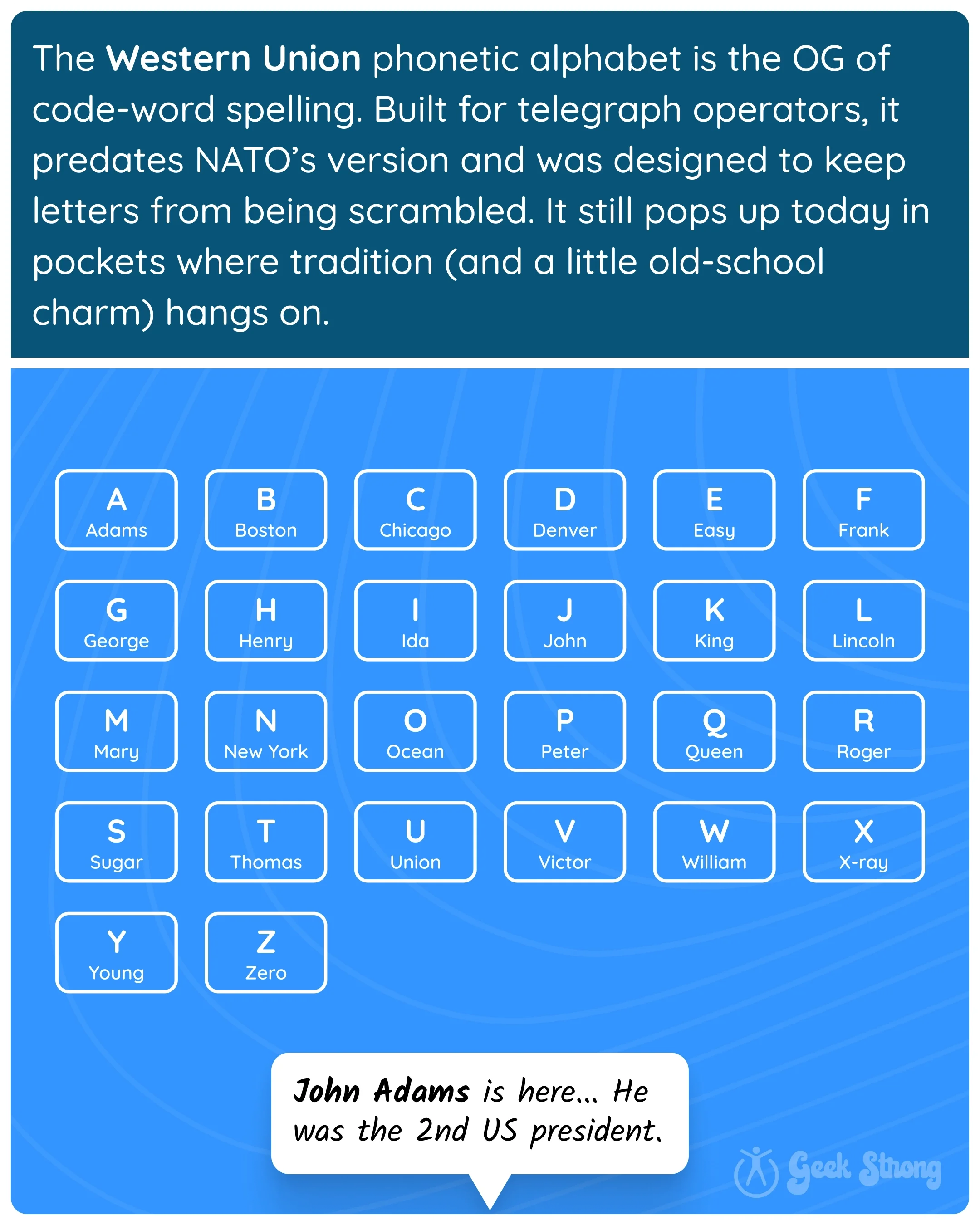
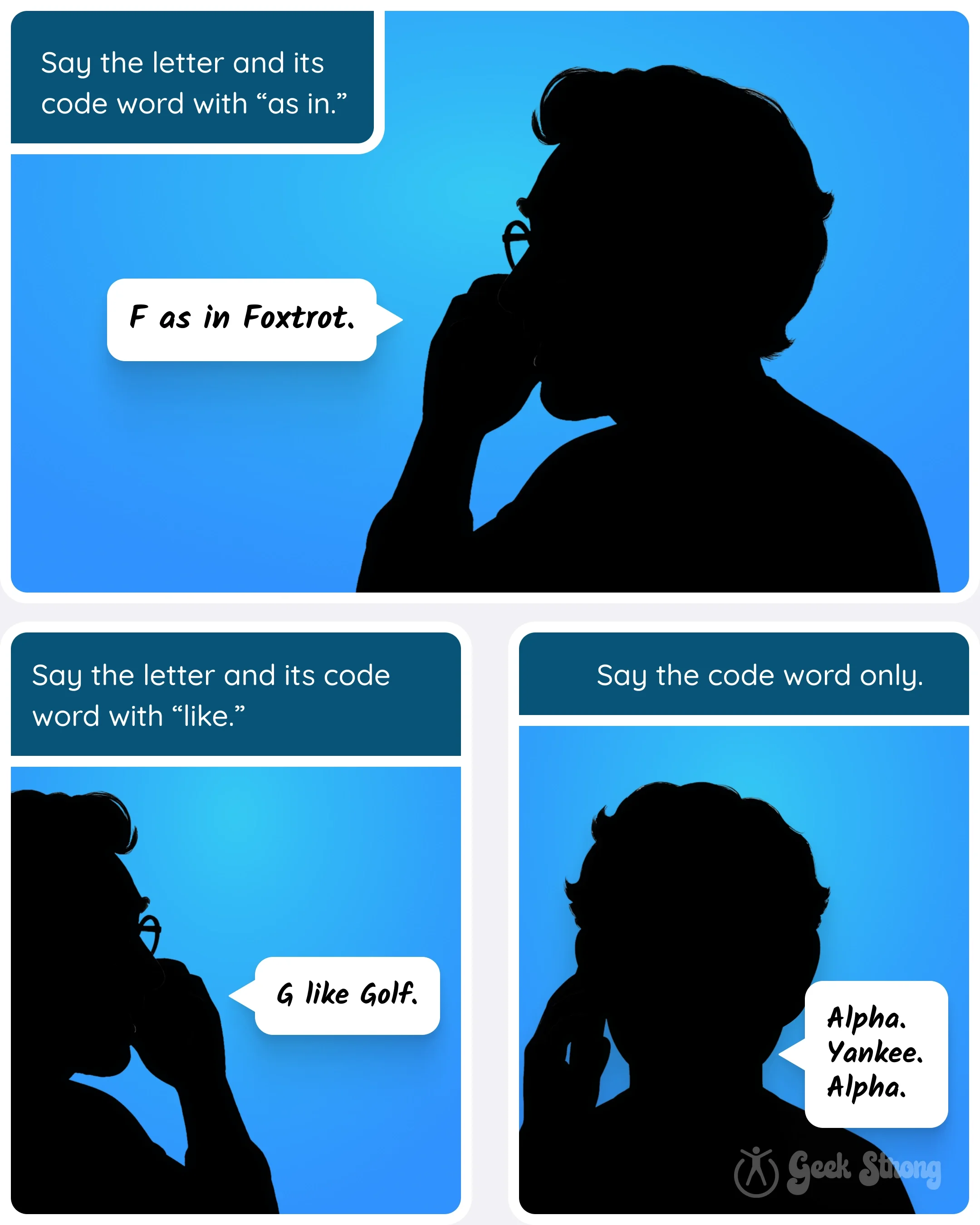
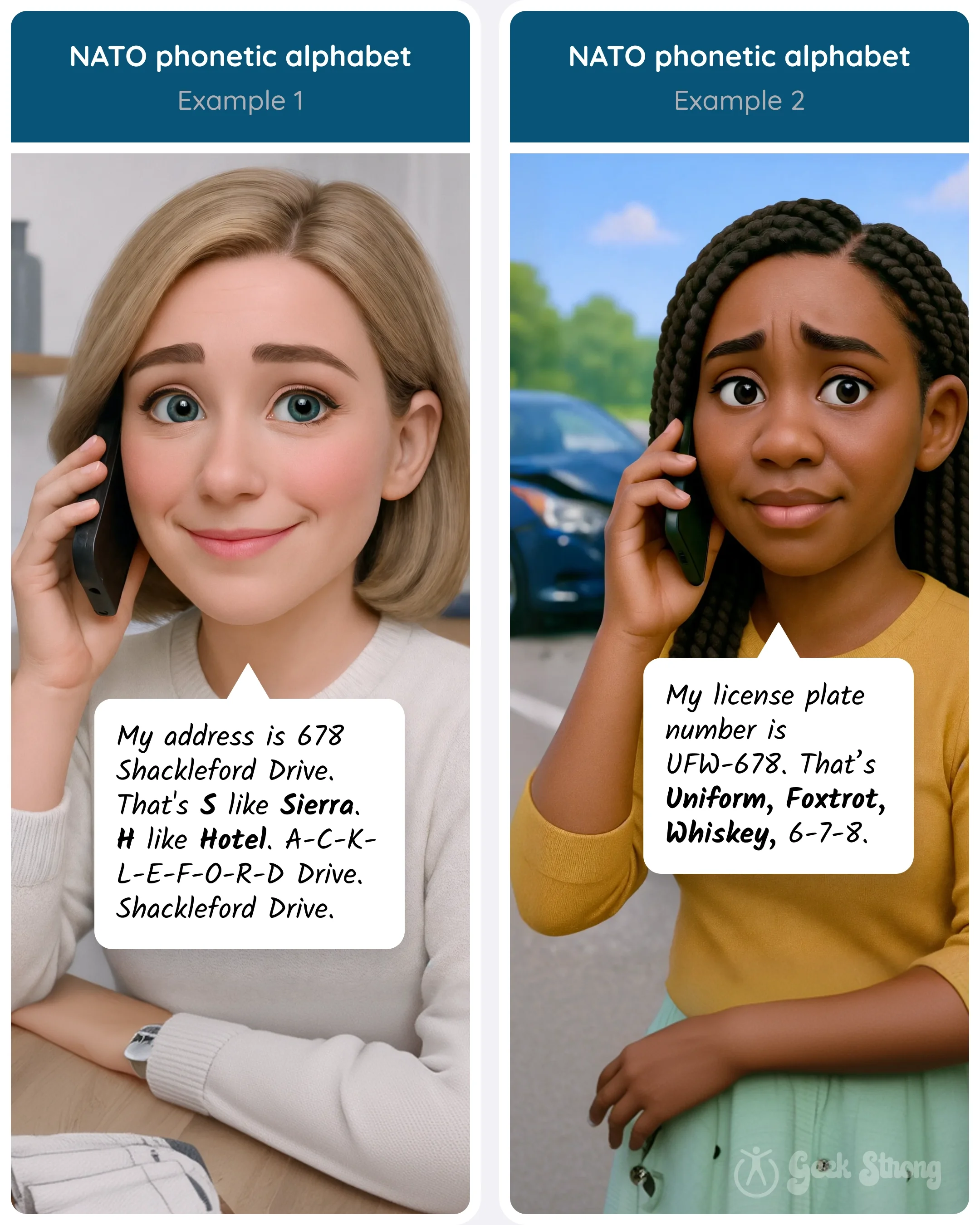
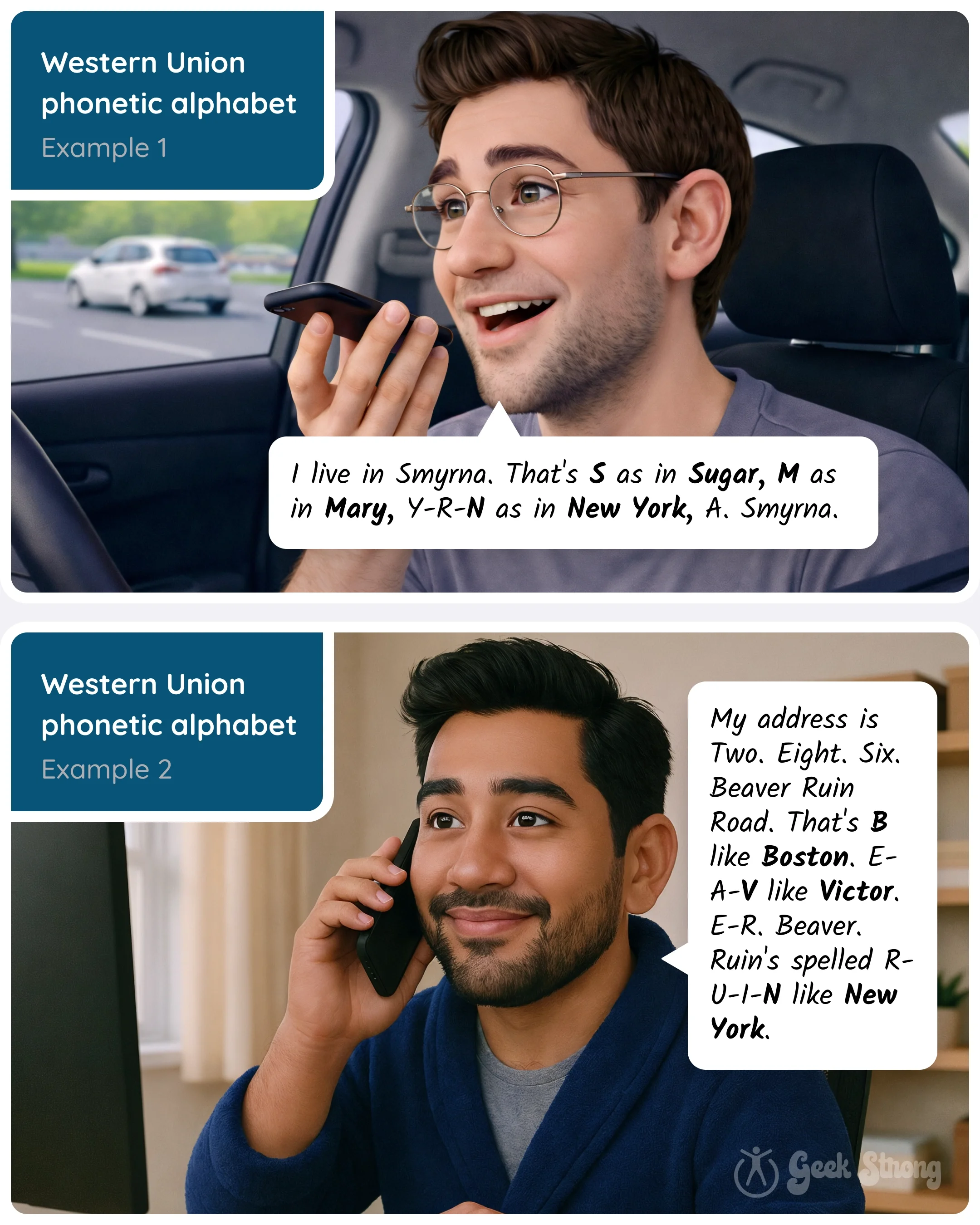
A phonetic alphabet for phone calls is a standardized set of code words — one per letter — designed to eliminate exactly this problem. Instead of improvising in real time, you use agreed-upon words that are distinct enough to survive a bad connection, a thick accent, or a panicked brain. The NATO phonetic alphabet (Alpha, Bravo, Charlie…) and the Western Union phonetic alphabet (Adams, Boston, Chicago…) are the two most widely used systems, and either will make you much easier to understand on a call.
The NATO phonetic alphabet was formally standardized by the International Civil Aviation Organization in 1956 to eliminate letter confusion across languages, accents, and noisy radio and phone connections — which is exactly why aviation, military, emergency services, and customer support operations still use it today.
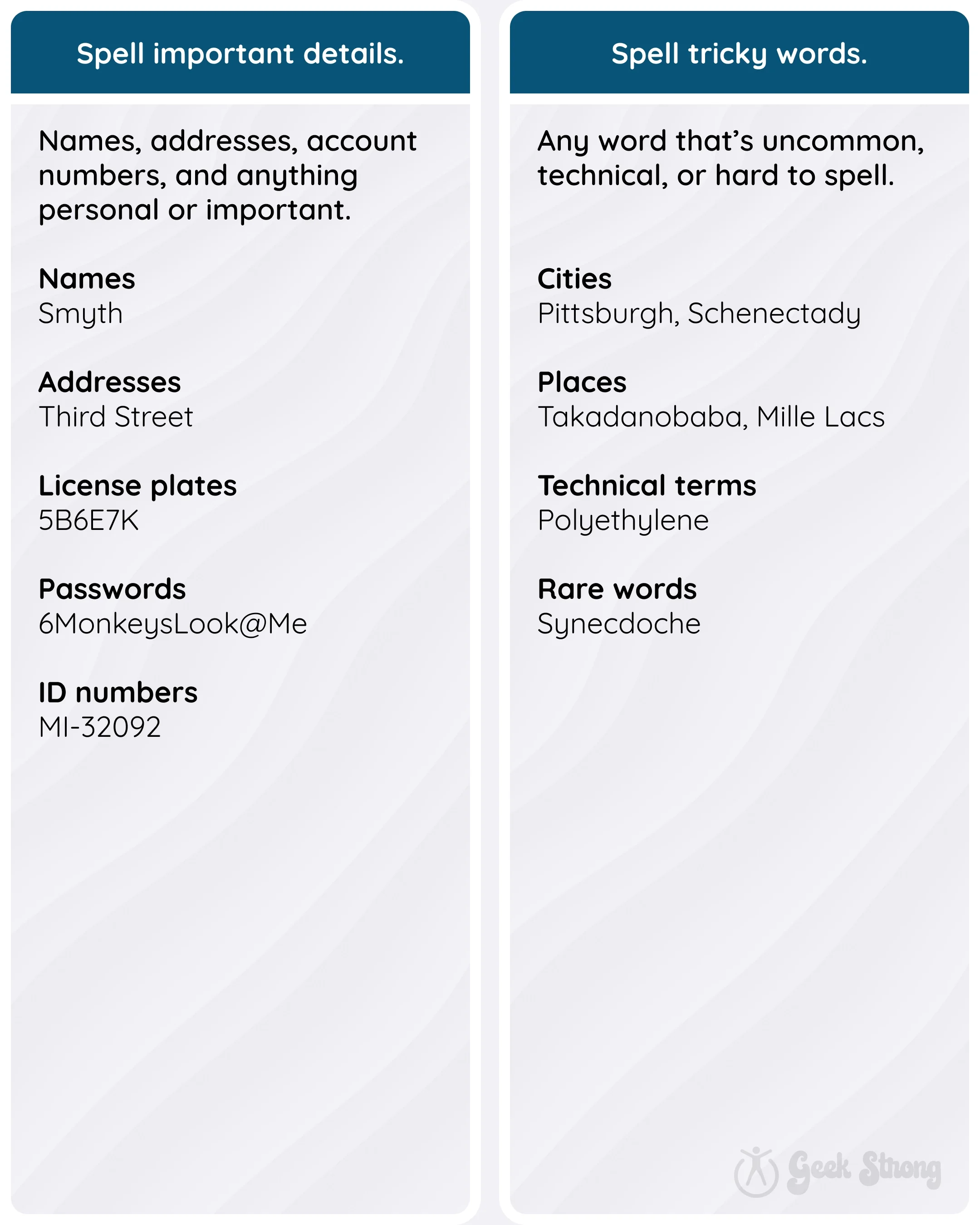
The funny thing is that most people already use a phonetic alphabet without realizing it. The problem is that everybody invents their own version in real time. That works… until it doesn't. "B," "D," "P," and "T" start fighting for dominance. "M" and "N" become indistinguishable twins. Meanwhile, the person on the other end is typing at the speed of panic, trying to decode your improvised system.
This connects directly to the Love More habit in patchOS. Clear communication reduces friction, lowers frustration, and helps people feel heard instead of confused. Tiny miscommunications may seem harmless, but they compound quickly — especially during appointments, customer service calls, and emergencies when getting it right actually matters.
You don't need to memorize the entire NATO alphabet overnight. Even a handful of consistent words — enough to cover your name, your email, your street — makes a real difference. And honestly? Sounding calm and clear on a phone call feels pretty great. Sometimes the difference between chaos and clarity is simply knowing that "N" stands for November, not Netflix.
Keep coming back. You're not alone. 🤓💪
-
Pick a challenge:
Learn the NATO phonetic alphabet code words for each letter in your first and last name
Save a phonetic alphabet chart to your phone so it's available when you need it during a call
Practice spelling your email address out loud using phonetic code words before your next important call
Use consistent phonetic code words the next time you spell something over the phone instead of improvising
Share the NATO or Western Union phonetic alphabet with one person who'd find it useful
-
Want help putting this into practice? Explore Patch Picks