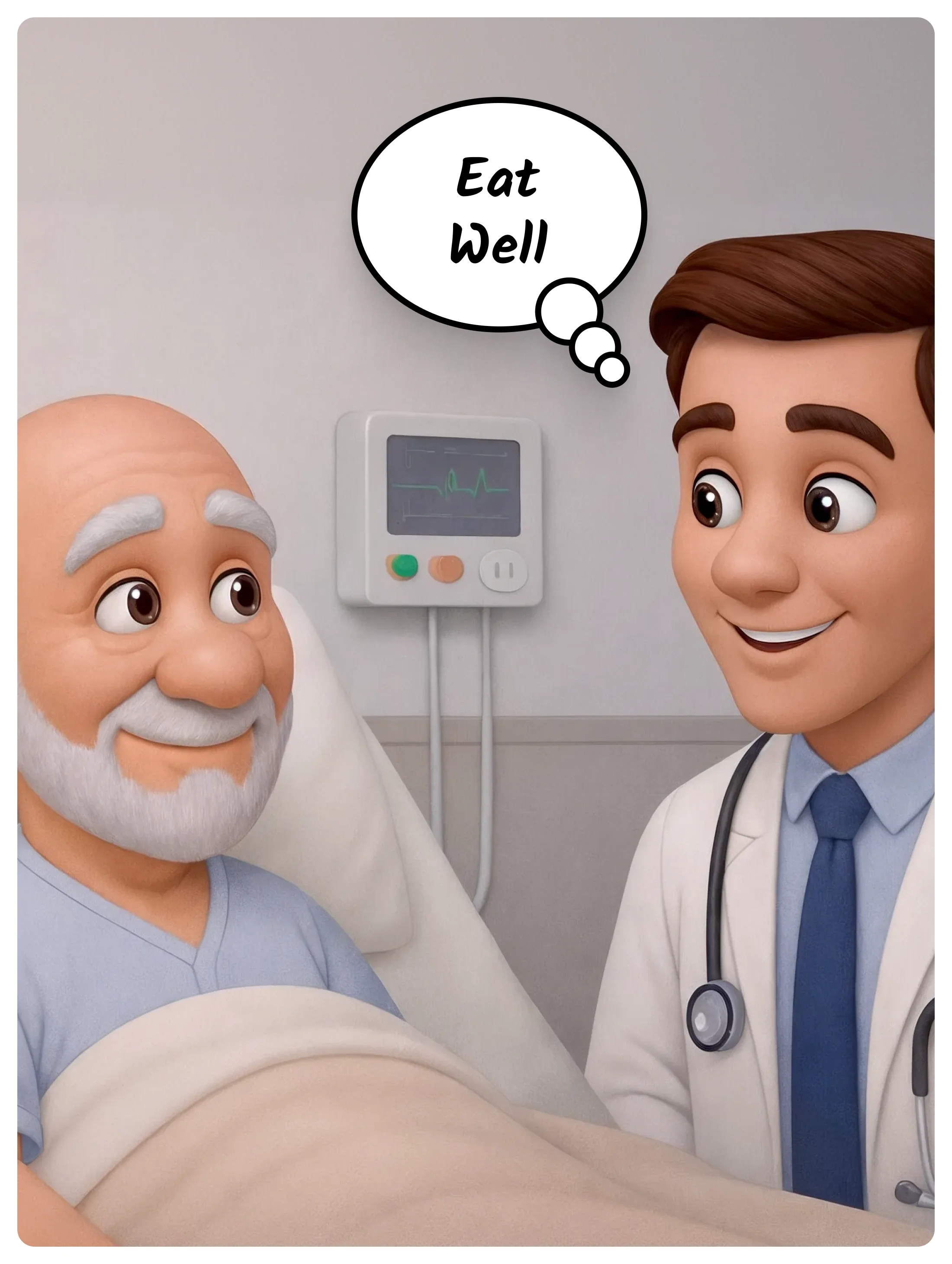
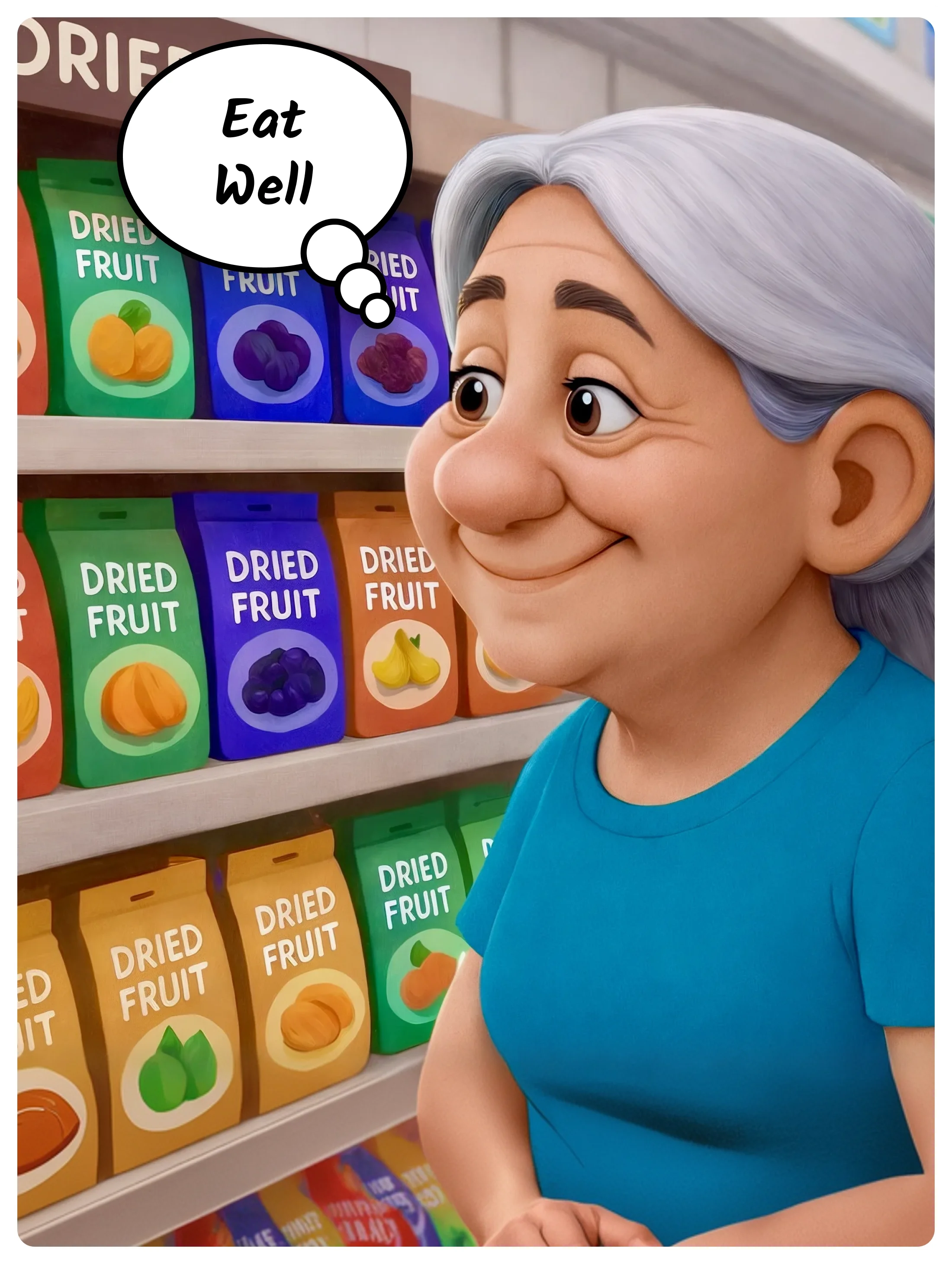
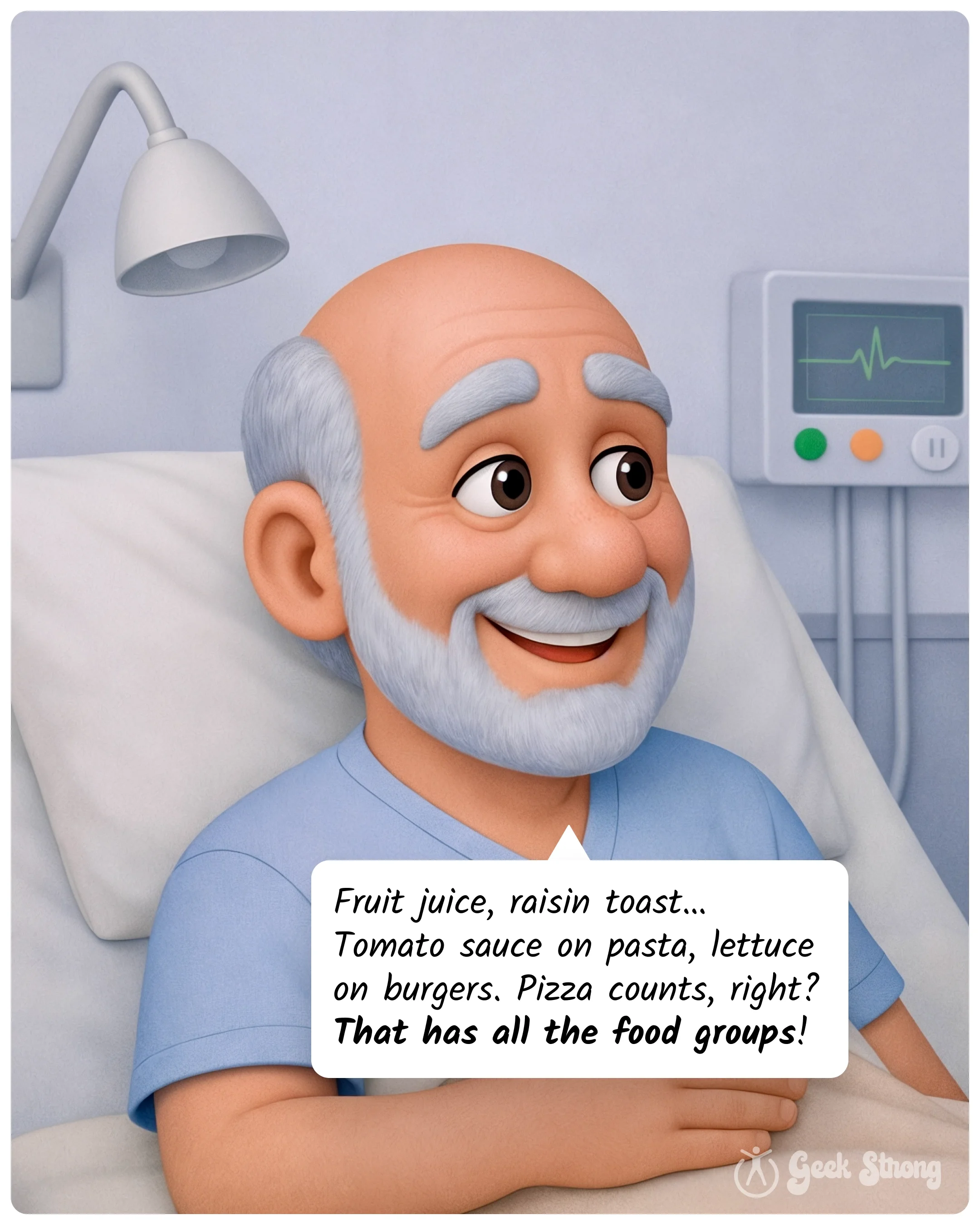
That has all the food groups
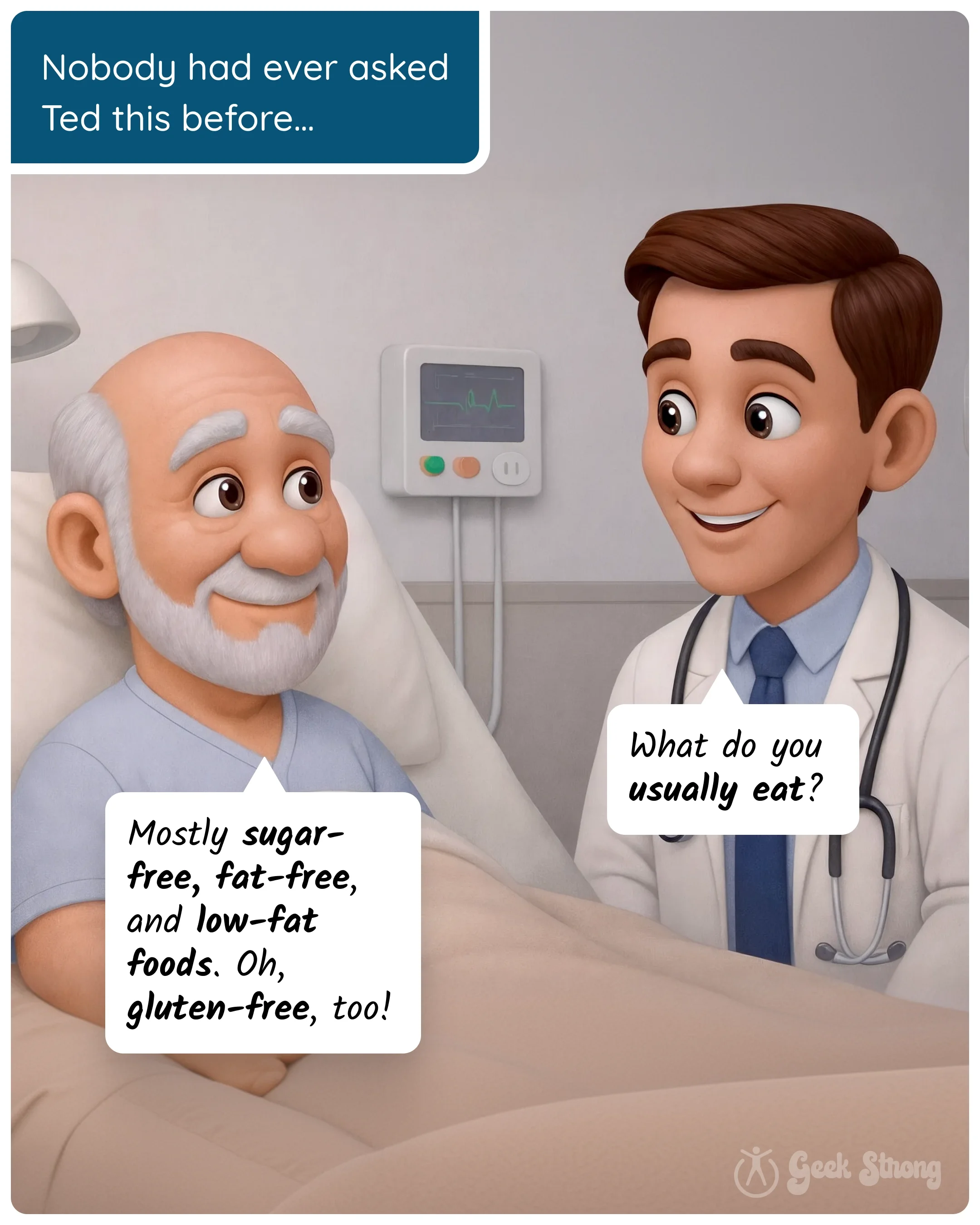
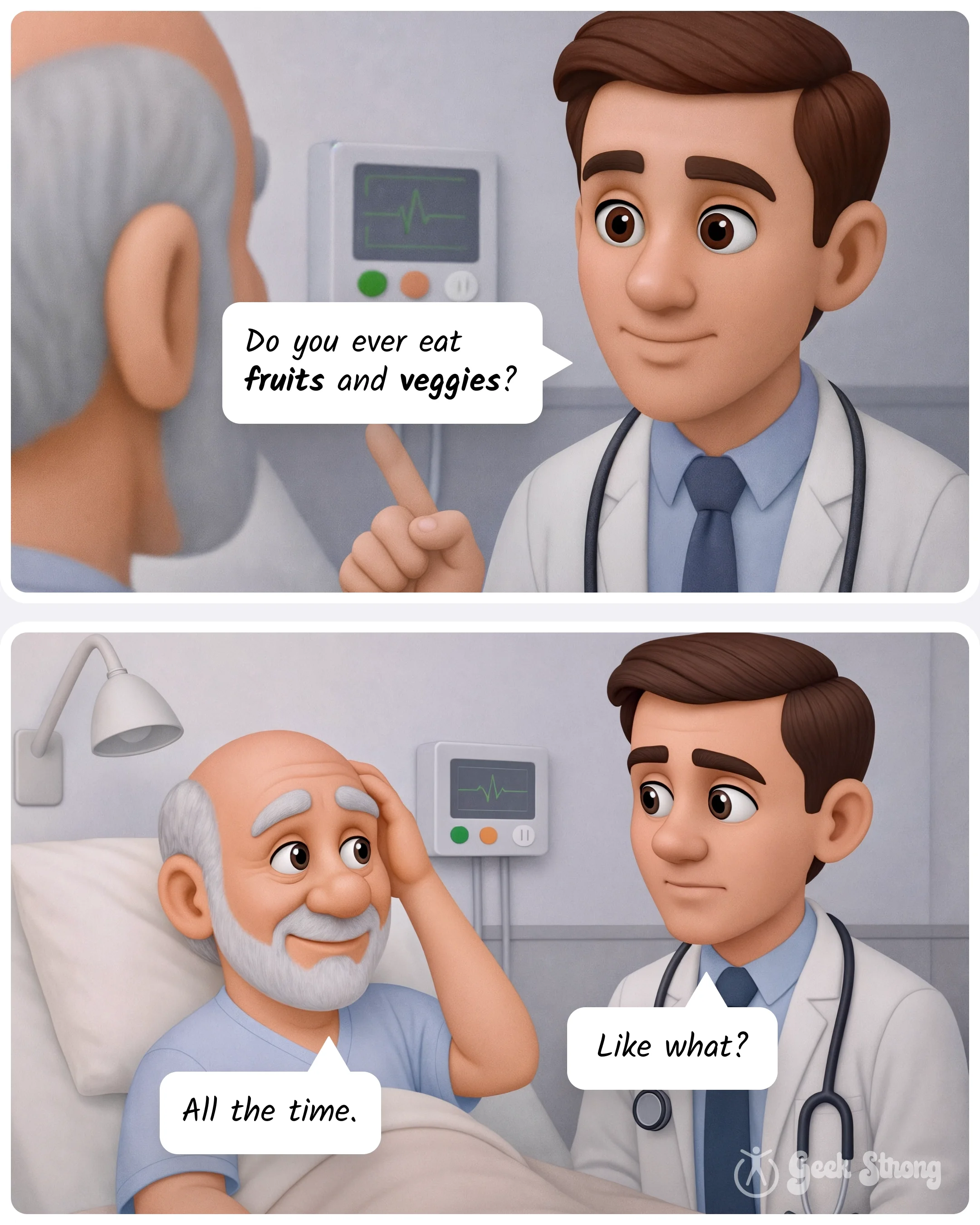
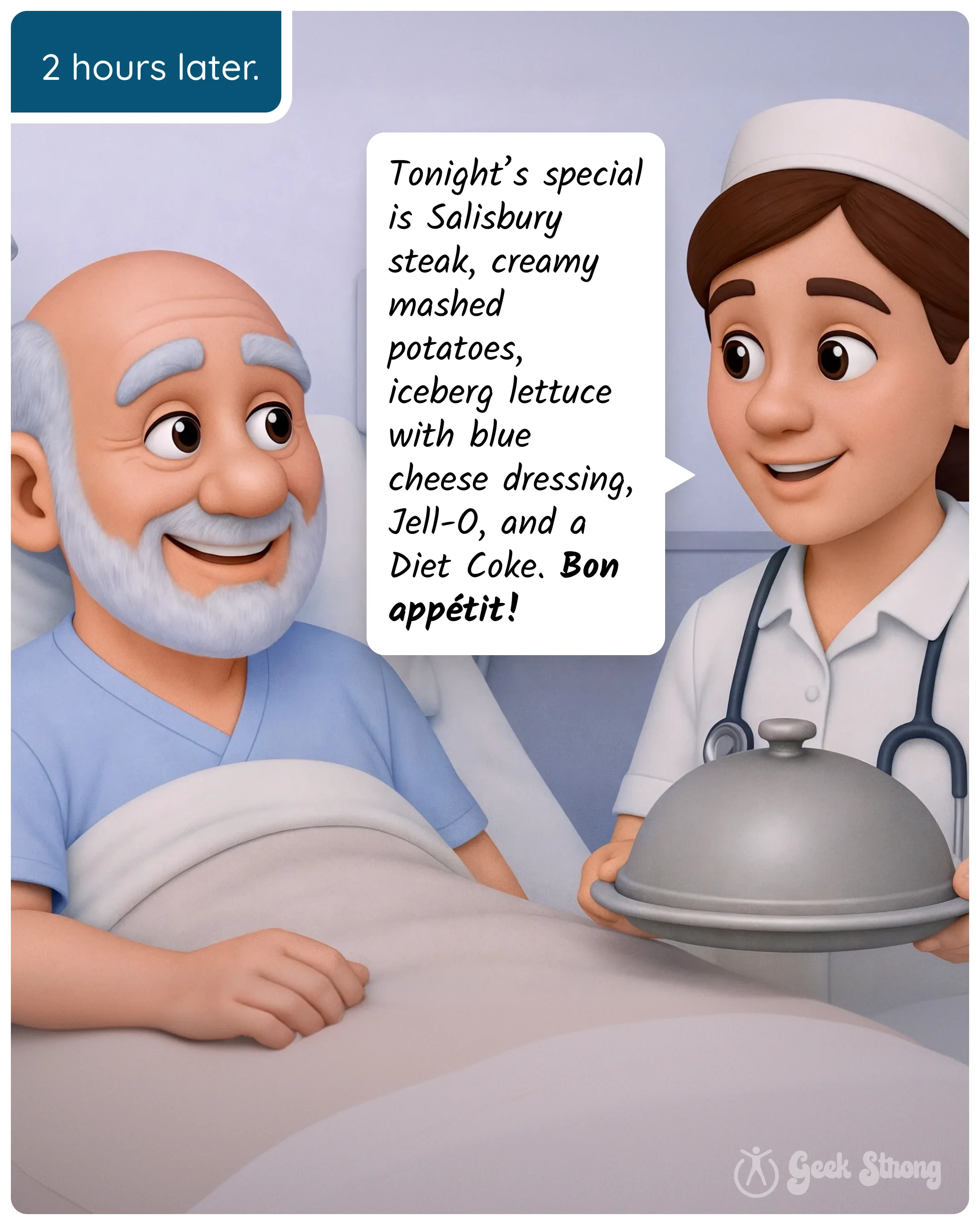
The doctor asked one simple question about Ted's diet. What followed was a masterclass in food label buzzwords. Paging Dr. Broccoli…
-
For decades, food label marketing has convinced people that "healthy" means low-fat, sugar-free, gluten-free, keto-friendly, protein-packed, or whatever buzzword is trending this week.
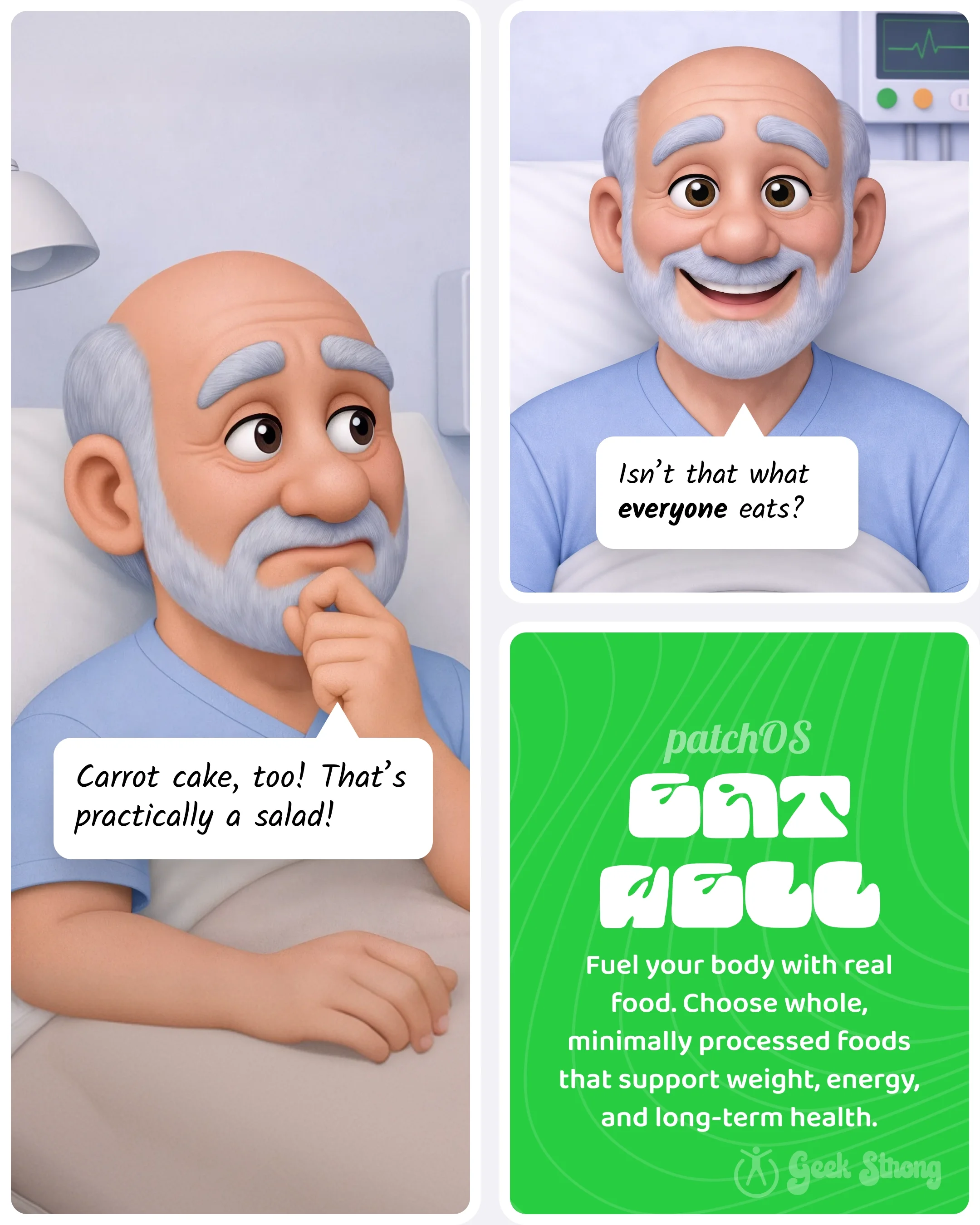
Nobody taught Ted to question any of this. He learned to trust the front of the box, the commercial, and the grocery store placement. Ultra-processed food labels said "healthy" — so it was. Fruit juice counted as fruit. Lettuce on a burger counted as vegetables. Carrot cake had carrots in it. That's practically a salad.
The sugar-free, gluten-free, healthy myth runs deep because it was designed to. Food companies spend billions to make sure you read "low-fat" and feel good about your choices — without ever flipping the package over to check what's actually in it.
What counts as healthy food is a simple question once you strip away the marketing. Does it look close to how it came out of the ground, off a tree, or out of the water? If yes, you're probably on the right track. If the answer requires reading a six-line ingredient list to figure out, that's worth noticing.
Food label marketing works by focusing attention on what a product removes — fat, sugar, gluten — rather than what it's actually made of. A low-fat yogurt can be loaded with added sugar. A gluten-free cookie is still a cookie. These labels signal health without requiring it, and most people have no reason to question them.
This Patch isn't about guilt, perfection, or obsessing over labels. It’s an invitation to ask better questions.
What foods actually nourish you? What leaves you feeling better a few hours later? And how much of what's in your fridge came from a label's promise rather than a real decision?
Keep coming back. You're not alone. 🤓💪
-
Pick a challenge:
Scan your pantry for food label marketing. Count how many products lead with "low-fat," "sugar-free," or "gluten-free" on the front of the package.
Pick one ultra-processed snack or meal you eat regularly and brainstorm a simpler, whole-food alternative
Read the ingredient list on three packaged foods you eat often and see how many ingredients you actually recognize
Build one meal this week around foods that look close to how they came from nature
Keep track of how often food label marketing influences your choices throughout the week
Ask yourself: "Would my great-grandparents recognize this as food?" before buying a heavily processed product
-
Want help putting this into practice? Explore Patch Picks